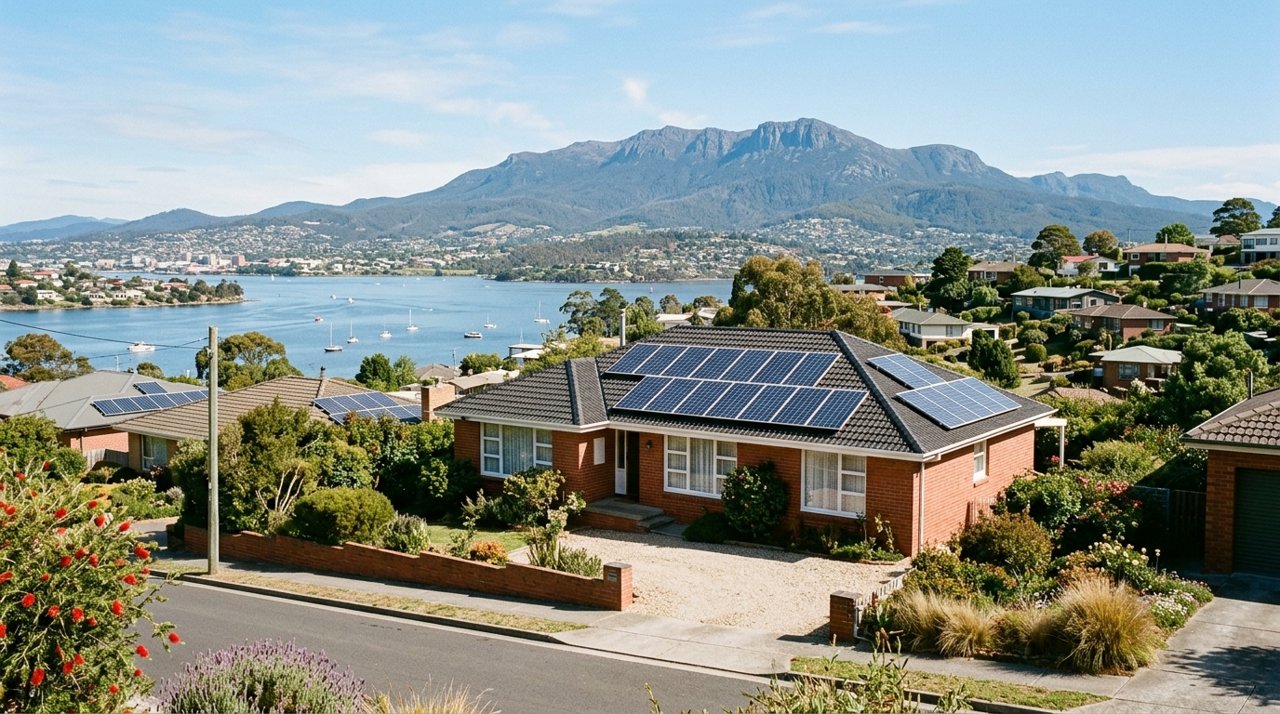
Eastern Shore households with solar and battery storage are increasingly able to join Virtual Power Plant (VPP) initiatives, offering a new way to contribute to Tasmania’s energy grid and potentially earn income. While the state’s VPP market is still developing, programs from retailers like Aurora Energy and trials by TasNetworks are opening opportunities for local participation.
A Virtual Power Plant aggregates numerous home batteries, along with other distributed energy resources, to act as a collective power source. This network can then be dispatched to support the electricity grid during periods of high demand or to help maintain stability, particularly as more intermittent renewable energy sources come online. Tasmania’s grid, largely powered by hydropower, is more stable than mainland Australia’s, meaning peak-demand events are less frequent, but Tasmanian batteries still play a role in inter-state market dispatch via the Basslink interconnector.
Retailer Programs: Aurora Energy Leading the Way
For Eastern Shore residents, the most accessible residential VPP program is currently the Aurora Energy Battery Bonus. As Aurora Energy is Tasmania’s primary electricity retailer, its customers across the Eastern Shore, including suburbs like Bellerive, Rosny, and Howrah, are eligible to participate. To join, households must be Aurora retail customers with a compatible battery system and a smart meter.
The Aurora Energy Battery Bonus functions more as a retail product that combines a capped flat retail electricity rate with optional VPP enrolment, rather than a direct per-event payment scheme. This means participants benefit from a stable electricity rate, with their battery contributing to the VPP when needed.
Network Trials and Broader Integration
Beyond retailer-led programs, TasNetworks is also exploring VPPs through “battery neighbourhood” pilots in specific, limited postcodes. Eastern Shore residents interested in these trials should inquire with their installer or TasNetworks directly about postcode eligibility.
At a national level, the Australian Energy Market Operator (AEMO) and the Australian Renewable Energy Agency (ARENA) have collaborated on VPP Demonstrations. These initiatives were designed to inform regulatory frameworks and operational processes for integrating Distributed Energy Resources (DER) into the National Electricity Market (NEM). While the direct data submission phase of these demonstrations concluded in 2021, the insights gained continue to shape how VPPs will participate in the broader energy market. In December 2024, the Australian Energy Market Commission (AEMC) established a “dispatch mode” framework, allowing aggregated resources like VPPs to participate in NEM dispatch.
What Participants Can Earn
For Tasmanian households participating in VPPs, typical annual earnings range from $150 to $400 per year. These returns are generally lower than those seen in mainland states due to Tasmania’s stable, hydropower-dominated grid, which experiences less wholesale price volatility and fewer peak-demand events.
It is important to note that VPP earnings are separate from the regulated minimum feed-in tariff for solar exports. From 1 July 2026, the Tasmanian Economic Regulator has set this minimum at 9.276 cents per kilowatt-hour (kWh).
Federal Support for Battery Installation
While Tasmania does not currently offer a state-specific battery rebate, Eastern Shore residents can significantly reduce the upfront cost of a home battery through the federal Cheaper Home Batteries Program. This program, which commenced in July 2025, provides an upfront discount of approximately 30% on the cost of a new battery. For a 13.5 kWh battery, this can amount to around $3,500 to $3,631. A key requirement for this federal rebate is that the installed battery must be VPP-capable, meaning it can support enrolment in a VPP, though actual enrolment remains optional. This rebate applies statewide, including Hobart and greater southern Tasmania.