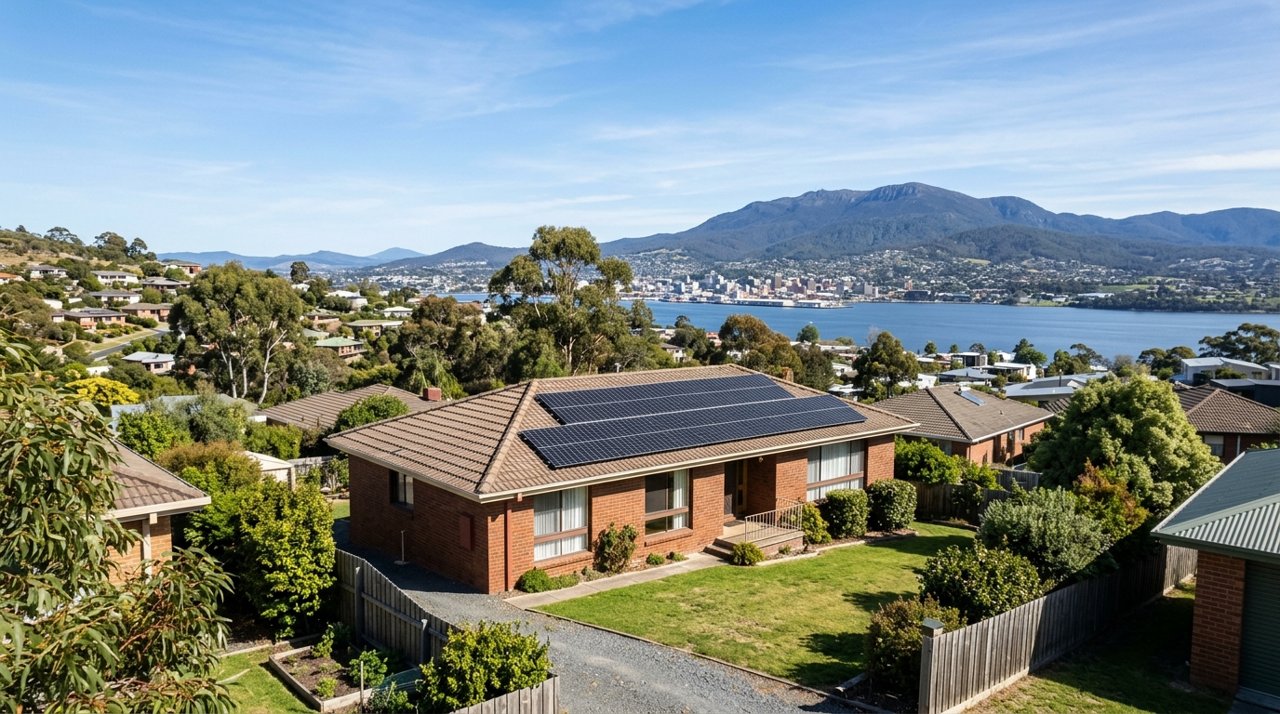
Residents across greater Hobart, particularly on the Eastern Shore, are seeing tangible progress in local councils’ efforts to embrace renewable energy and electric vehicle (EV) infrastructure. A significant development for the region is the commissioning of a new community battery in Glebe Hill, Howrah, marking a key step in Tasmania’s energy transition.
The Glebe Hill community battery, part of a TasNetworks pilot program, was commissioned by the second quarter of 2025. This project received funding from the Australian Government’s Community Batteries for Household Solar Program, delivered through the Department of Climate Change, Energy, the Environment and Water (DCCEEW). These batteries are designed to store excess solar energy generated by rooftop panels in a neighbourhood, releasing it back into the grid during peak demand, thereby stabilising local power supply and reducing reliance on non-renewable sources. TasNetworks is installing up to eight such batteries across Tasmania as part of this trial.
Clarence City Council has also made strides in rooftop solar, with 155 kilowatts of solar systems installed on various council buildings. These include prominent facilities such as the Clarence Aquatic Centre, the Council Works Depot, Rosny Child Care Centre, Clarence Children’s Services, Wentworth Park Sports Facility, and the Lindisfarne Citizens Activity Centre. In terms of electric vehicles, the Council operates a public 22-kilowatt EV charging station at its offices in Rosny Park and aims to expand its current fleet of four electric vehicles. Further, Clarence has significantly upgraded its residential street lighting to energy-efficient LEDs, with 2,158 out of 3,600 lights already replaced in the first phase, projecting a 4,022-tonne reduction in greenhouse gas emissions over 20 years.
Nearby, Sorell Council is actively pursuing its own renewable energy goals. The Council generates at least 58,392 kWh of electricity annually from solar panels on its buildings. In September 2026, Sorell Council received a second instalment of $58,000 from the Federal Government Department of Industry for a “Sorell Smart Solar Upgrade” project. The Council joined the Climate Council Cities Power Partnership in May 2023, pledging to install renewable energy sources on council buildings, implement energy-efficient lighting, and reduce waste emissions. Sorell has already reduced its energy consumption by 16.6% between 2019/2020 and 2021/2022, largely due to street lighting upgrades. The Council is also planning to introduce green waste collection and transition to a full Food Organics and Garden Organics (FOGO) service from 2024/2025, aiming to significantly reduce landfill emissions, which currently account for 85% of its greenhouse gas footprint. Public EV charging is available in Sorell, including at Neil Davis Place.
In the City of Hobart, the Council launched its “Climate Ready Hobart Strategy” in September 2024, outlining a path to zero emissions and climate resilience by 2040. While the Doone Kennedy Hobart Aquatic Centre boasts over 1,500 solar panels, saving more than $130,000 annually in energy costs, a recent progress update from April 2025 noted that renewable electricity generation by the City has stalled, with no new solar systems installed since 2019. The Council’s target to achieve 100% net renewable electricity by 2040 is currently “Off Track”.
Hobart is, however, expanding its EV charging network. The City of Hobart’s car parks host multiple public charging stations, including two 22kW chargers in Argyle Street Car Park and two 50kW fast chargers in Dunn Place Car Park. The Council’s Electric Vehicle Charging Infrastructure Policy, adopted in August 2025, supports the installation of private charging infrastructure and may explore kerbside charging options for residents without off-street parking. TasNetworks is also investigating Hobart City Council as a potential site for future community battery installations.
These projects across Clarence, Sorell, and Hobart demonstrate a concerted effort by local governments to reduce emissions, lower energy costs, and provide sustainable infrastructure for ratepayers, contributing to Tasmania’s broader renewable energy goals.