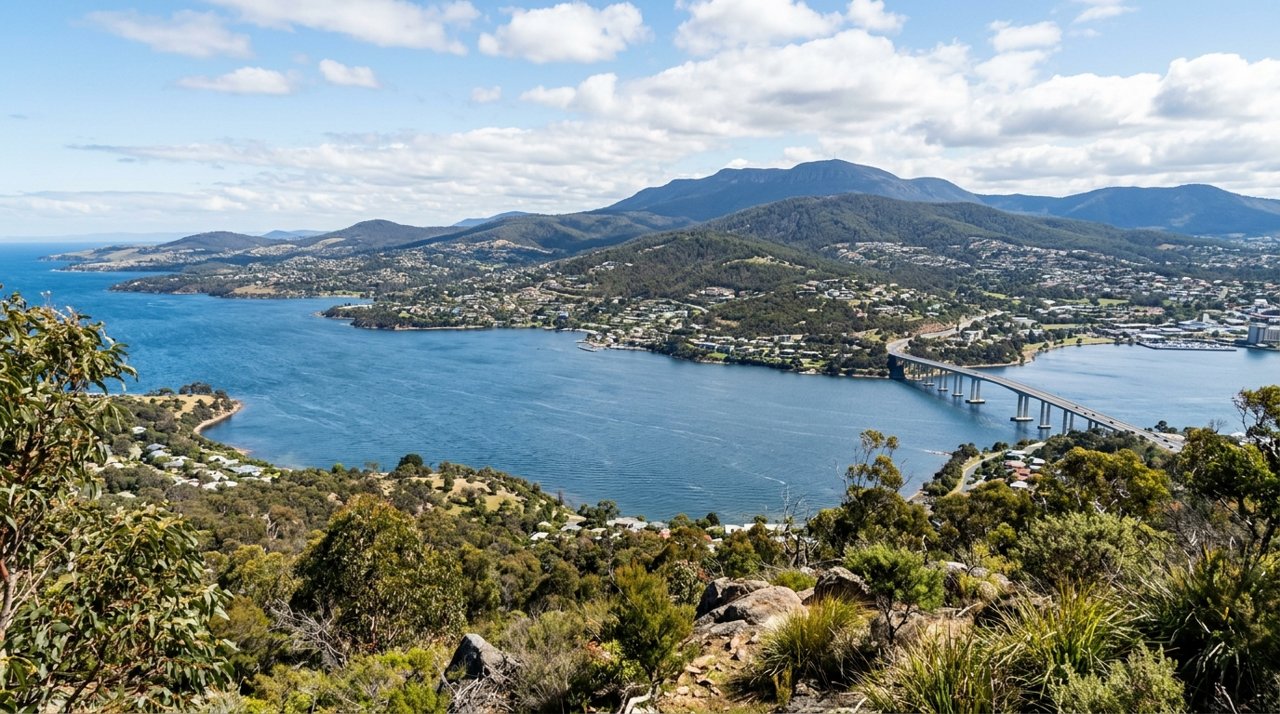
Hobart and Tasmania’s Eastern Shore residents have just concluded a winter season that ranks as the second-warmest on record for the capital city, according to a report by ABC News. The mild conditions are set to be followed by a “spring scorcher” across south-east Australia, the ABC reported on Saturday.
The unseasonably warm winter for Hobart aligns with a broader trend across the nation’s south-east. Sydney and Melbourne both recorded their warmest winters on record, while Canberra also experienced its highest ever temperatures for the season. Adelaide, like Hobart, saw its second-warmest winter on record.
The warmer conditions throughout winter have been influenced by persistent high-pressure systems. Weatherzone noted in mid-August that a strong high-pressure system was centred over Tasmania, contributing to “springlike warmth” spreading across the region. This system was observed to be blocking cold air from reaching Tasmania and the eastern mainland, instead funneling mild maritime air onshore.
Earlier in July, an intense high-pressure system stalled over Tasmania led to a provisional record for the highest mean sea level pressure ever recorded in Australia, specifically in the central Tasmanian town of Ouse, as reported by ABC News. Such powerful and slow-moving high-pressure systems are known to bring settled, calm weather with clear skies, though they can also lead to cold temperatures and frosty conditions overnight. However, in this instance, the systems contributed to the overall warmer winter.
Looking back to autumn 2026, the Bureau of Meteorology (BoM) indicated that mean maximum temperatures were very much above average for most of Tasmania, with some areas on the south and east coast recording their highest on record. Hobart (Ellerslie Road) specifically registered a mean daily maximum temperature of 19.5 °C for autumn, which was 2.1 °C above its long-term average, setting a precedent for the mild conditions that continued into winter.
As Tasmanians look towards spring, the forecast for a “scorcher” suggests a continuation of above-average temperatures. Residents are encouraged to stay informed on local weather updates from the Bureau of Meteorology as the season progresses.
For more details on the national weather outlook, readers can refer to the original report by ABC News: https://www.abc.net.au/news/2026-08-29/spring-scorcher-to-follow-record-warm-winter-australia-weather/107090824